
When is Cervical HPV Screening Indicated? Age-Based Screening Guidelines, Primary hrHPV Testing & Co-Testing Protocols
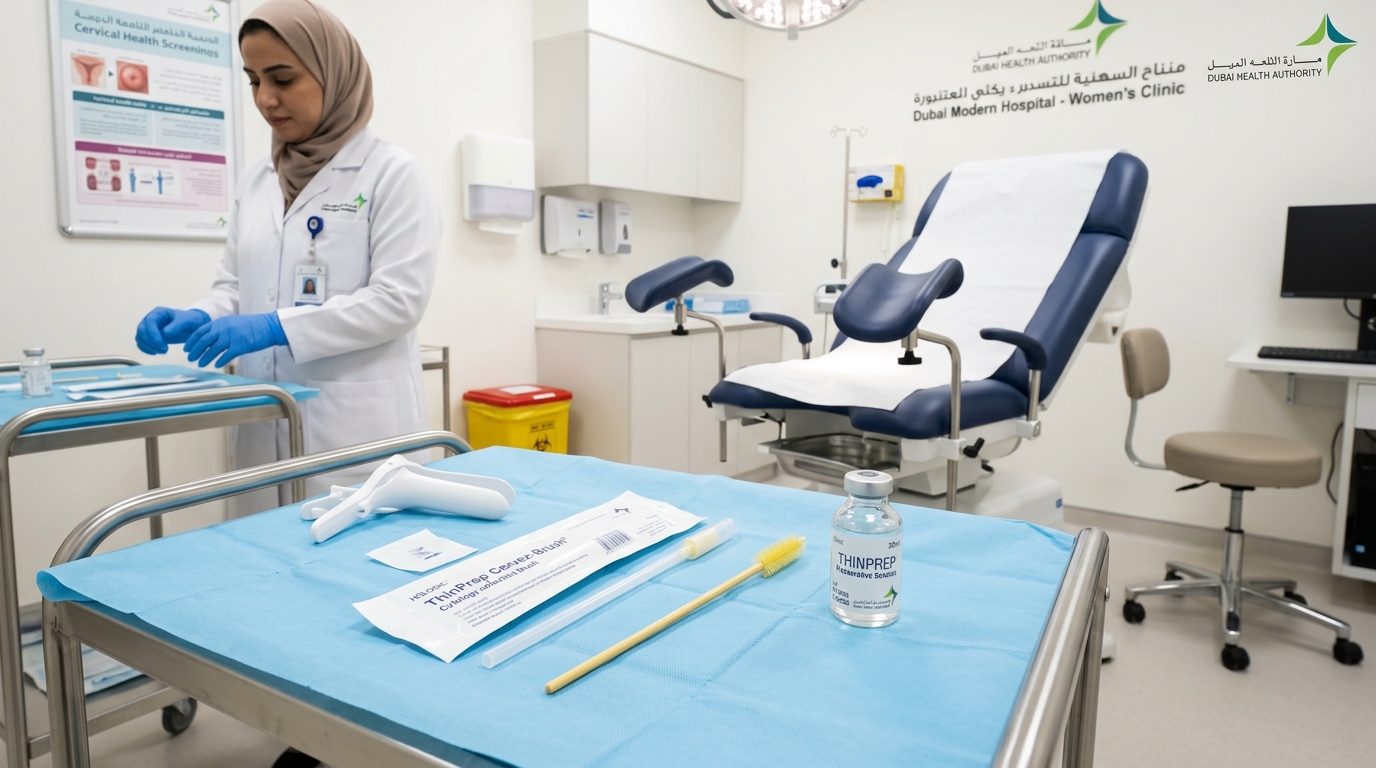
In the United Arab Emirates, cervical cancer remains one of the most preventable malignancies affecting women. Through nationwide awareness and standardized screening programs implemented across Dubai, Abu Dhabi, and the Northern Emirates, women have access to world-class preventive services. Scheduling regular specialized women’s health and HPV screening packages in Dubai ensures timely molecular detection, empowering gynecologists to identify high-grade dysplastic lesions years before invasive malignancy can develop.
Molecular Pathogenesis: How High-Risk HPV Drives Cervical Carcinogenesis
Cervical cancer does not arise spontaneously; it is the culmination of a multi-step oncogenic process initiated by persistent infection with high-risk mucosal HPV types. Understanding this molecular cascade explains why viral DNA/RNA detection serves as a superior screening tool compared to morphological cytology:
- Viral Epithelial Infiltration: HPV infects basal keratinocytes at the cervical transformation zone (the squamocolumnar junction) through microscopic epithelial abrasions sustained during sexual activity.
- Oncoprotein Expression (E6 and E7): Upon persistent intracellular replication, high-risk genotypes integrate their viral genome into host chromosomes. The early viral oncoprotein E6 binds to and promotes ubiquitin-mediated degradation of the tumor suppressor protein p53, abolishing DNA repair and apoptosis. Concurrently, oncoprotein E7 binds and inactivates the retinoblastoma protein (pRb), releasing transcription factor E2F and driving uncontrolled cell cycle transit from G1 into S phase.
- High-Risk Genotype Spectrum: Fourteen hrHPV genotypes are categorized as oncogenic: 16, 18, 31, 33, 35, 39, 45, 51, 52, 56, 58, 59, 66, and 68. Among these, types 16 and 18 are responsible for greater than 70% of invasive cervical squamous cell carcinomas and up to 85% of cervical adenocarcinomas.
- Transient vs. Persistent Infection: Over 80% to 90% of newly acquired HPV infections in young immunocompetent women are cleared or suppressed to undetectable levels by host cell-mediated immunity within 12 to 24 months. Only a minority of infections that persist beyond 2 years carry significant risk of progressing to Cervical Intraepithelial Neoplasia grade 3 (CIN 3) and invasive cancer.
Evolution of Screening: Why Primary hrHPV Has Replaced the Pap Smear
For more than half a century, the conventional Papanicolaou (Pap) smear was the cornerstone of cervical cancer prevention. However, cytological examination suffers from notable analytical and biological limitations:
| Evaluation Parameter | Conventional Cytology (Pap Smear) | Primary High-Risk HPV (hrHPV) Molecular Testing |
|---|---|---|
| Clinical Sensitivity for CIN 2/3+ | 50% to 65% (Subject to sampling artifacts and visual fatigue) | >95% (Objective automated nucleic acid amplification) |
| Negative Predictive Value (NPV) | Moderate; necessitates repeat testing every 3 years | >99.7% at 5 Years; safe extension of screening interval |
| Adenocarcinoma Detection | Poor; endocervical glandular lesions frequently missed | High; identifies viral oncogenes regardless of glandular architecture |
| Inter-Observer Reproducibility | Subjective; high variance among cytopathologists | Objective; automated real-time PCR or isothermal amplification |
| Self-Sampling Feasibility | Not feasible; requires speculum examination and scrape | Validated; vaginal self-swabs provide comparable molecular sensitivity |
Age-Stratified Screening Guidelines: When to Start, Interval & When to Stop
Clinical indications for cervical HPV screening are strictly stratified by patient age to maximize cancer prevention while minimizing overtreatment of self-limiting transient infections in young women:
| Age Bracket | Recommended Screening Modality | Screening Interval | Clinical Rationale & Management |
|---|---|---|---|
| Under 21 Years | NO SCREENING INDICATED | None | Invasive cancer is exceedingly rare (<1 per million); HPV infections are highly transient and clear spontaneously. Biopsies risk cervical incompetence. |
| Ages 21 to 24 Years | Cytology (Pap Smear) Alone (If indicated) | Every 3 Years | HPV testing is strictly contraindicated due to high prevalence of transient viral shedding that causes unnecessary anxiety and loop electrosurgical excision procedures (LEEP). |
| Ages 25 to 29 Years | Primary High-Risk HPV (hrHPV) Alone (Preferred) | Every 5 Years | American Cancer Society milestone. Early molecular identification of CIN 3 precursors. If hrHPV is unavailable, cytology alone every 3 years remains acceptable. |
| Ages 30 to 65 Years | Option A: Primary hrHPV Alone (Preferred, Every 5y) Option B: Co-Testing (hrHPV + Pap, Every 5y) Option C: Pap Alone (Every 3y) |
Every 5 Years (Options A & B) Every 3 Years (Option C) |
Optimal screening window; maximal sensitivity against both squamous and adenocarcinoma lesions. Co-testing offers marginal gain over primary hrHPV alone. |
| Over 65 Years | Cessation of Screening (Provided adequate prior negative history) | Discontinue | Permitted if 10 consecutive years of documented negative screening (two negative hrHPV tests or three negative Pap smears within prior 10 years, most recent within 5 years). |
Special Clinical Indications for Urgent or Accelerated Screening
Routine 5-year intervals do not apply to women possessing specific immunocompromising or high-risk clinical profiles:
- HIV-Infected Women: Screen annually starting at the time of initial HIV diagnosis with cervical cytology. Women aged 30 and older can undergo co-testing; if results are normal, intervals may be extended to every 3 years.
- Solid Organ Transplant Recipients & Biologic Therapy: Women taking systemic immunosuppression (calcineurin inhibitors, anti-TNF agents) demonstrate reduced cellular immunity and rapid viral reactivation, warranting annual co-testing.
- Prior History of High-Grade Dysplasia (CIN 2, CIN 3, or AIS): Continued routine screening for at least 25 years post-treatment, even if the patient exceeds 65 years of age.
- In Utero Diethylstilbestrol (DES) Exposure: Annual screening due to elevated lifetime risk of clear cell adenocarcinoma of the cervix and vagina.
- Symptomatic Patients (Any Age): Women presenting with post-coital bleeding, unexplained intermenstrual bleeding, postmenopausal bleeding, persistent watery foul-smelling vaginal discharge, or deep pelvic pain require immediate diagnostic colposcopy and directed cervical biopsy regardless of prior negative screening results.
HPV Vaccination Status: Does the Vaccine Eliminate the Need for Screening?
A widespread misconception is that receiving the HPV vaccine (Gardasil 9, Gardasil, or Cervarix) eliminates the need for cervical screening. Clinical guidelines mandate that fully vaccinated women follow the exact same screening schedule as unvaccinated women:
| Vaccine Protection Parameter | Biological Reality | Clinical Screening Mandate |
|---|---|---|
| Coverage of Gardasil 9 | Protects against HPV 6, 11, 16, 18, 31, 33, 45, 52, 58 (~90% of cervical cancers) | Remaining 10% of high-risk oncogenic genotypes (e.g., 35, 39, 51, 56, 59, 68) are NOT covered |
| Prior Exposure | Vaccines are prophylactic, not therapeutic | Infections acquired prior to vaccination can persist, undergo genomic integration, and progress to dysplasia |
| Vaccine Waning & Compliance | High long-term immunity, but incomplete series may provide suboptimal titers | Vaccination records do not modify standard age-based screening algorithms |
Post-Menopausal Cervical Screening Challenges
Screening postmenopausal women presents distinct anatomical and biological nuances that clinicians must navigate:
- Transformation Zone Recession: With declining systemic estrogen, the squamocolumnar junction recedes deep into the endocervical canal, rendering standard ectocervical spatulas inadequate. An endocervical brush (cytobrush) must be rotated 360 degrees to ensure adequate sampling of the squamocolumnar epithelium.
- Atrophic Vaginitis & Cytological Artifacts: Severe mucosal atrophy can mimic high-grade squamous intraepithelial lesions (HSIL) or atypical squamous cells of undetermined significance (ASC-US) on Pap smears. Molecular hrHPV testing circumvents this morphological ambiguity by detecting viral DNA rather than cellular atypia. In cases of equivocal cytology in atrophic tissue, a short course of topical vaginal estrogen for 2 weeks prior to repeat sampling restores cellular architecture.
- Postmenopausal Bleeding: Never assume postmenopausal bleeding is attributable to benign atrophic vaginitis. Immediate direct speculum visualization, endometrial ultrasound (evaluating endometrial stripe thickness), and cervical biopsy are mandatory.
Managing Results: ASCCP Consensus Reflex Triage Algorithms
When primary hrHPV testing returns positive, accredited UAE laboratories automatically execute reflex algorithms according to the American Society for Colposcopy and Cervical Pathology (ASCCP) consensus guidelines:
- HPV 16 or 18 Positive: Immediate referral for diagnostic colposcopy and directed punch biopsy, regardless of cytological appearance, due to high immediate risk (>25%) of underlying CIN 3.
- Other 12 hrHPV Positive with Normal Pap (NILM): Repeat co-testing in 12 months. Over 60% of transient non-16/18 infections clear spontaneously without causing tissue pathology. If HPV persistence is confirmed at 12 months, colposcopy is mandatory.
- Other 12 hrHPV Positive with Abnormal Pap (ASC-US or higher): Immediate colposcopy referral.
- hrHPV Negative with Normal Cytology: Return to routine screening in 5 years.
Frequently Asked Questions (FAQ)
Can I get an HPV test during my menstrual period?
It is best to schedule cervical screening mid-cycle (10 to 20 days after the first day of your last menstrual period). Heavy menstrual flow can obscure cytological evaluation and dilute cellular yield in liquid-based preservative media. However, light spotting does not invalidate molecular PCR testing.
Is cervical screening necessary after a total hysterectomy?
If a woman underwent a total hysterectomy with complete surgical removal of the cervix for benign conditions (such as uterine fibroids or menorrhagia) and has no prior history of CIN 2+, cervical screening is discontinued. If the hysterectomy was subtotal (supracervical, leaving the cervix intact) or performed for cervical dysplasia or cancer, regular vaginal cuff cytology or cervical screening is required.
What preparation is required before an HPV screening appointment?
For 48 hours prior to your exam: avoid sexual intercourse, douching, vaginal medications, tampons, or contraceptive creams/lubricants. These substances can coat epithelial cells and interfere with diagnostic accuracy.
Is self-collected HPV testing accurate compared to a clinician-collected swab?
Clinical trials show that validated vaginal self-swabs tested via PCR have diagnostic accuracy virtually identical to clinician-collected cervical samples for detecting high-risk HPV DNA, making self-sampling an attractive option for women with barriers to speculum examinations.
Scientific References & Authoritative Clinical Guidelines
- American Cancer Society (ACS). Cervical Cancer Screening Guidelines for Individuals with Average Risk: 2024 Update. CA Cancer J Clin, 2024.
- U.S. Preventive Services Task Force (USPSTF). Screening for Cervical Cancer: US Preventive Services Task Force Recommendation Statement. JAMA, 2024.
- Dubai Health Authority (DHA). Standards for Women’s Health Preventive Services: Cervical Cancer Early Detection Guidelines. UAE Health Regulations, 2024.