
When is Chlamydia NAAT Testing Indicated? Clinical Guidelines, Asymptomatic Screening, Extra-Genital Swabs & Test-of-Cure Protocols
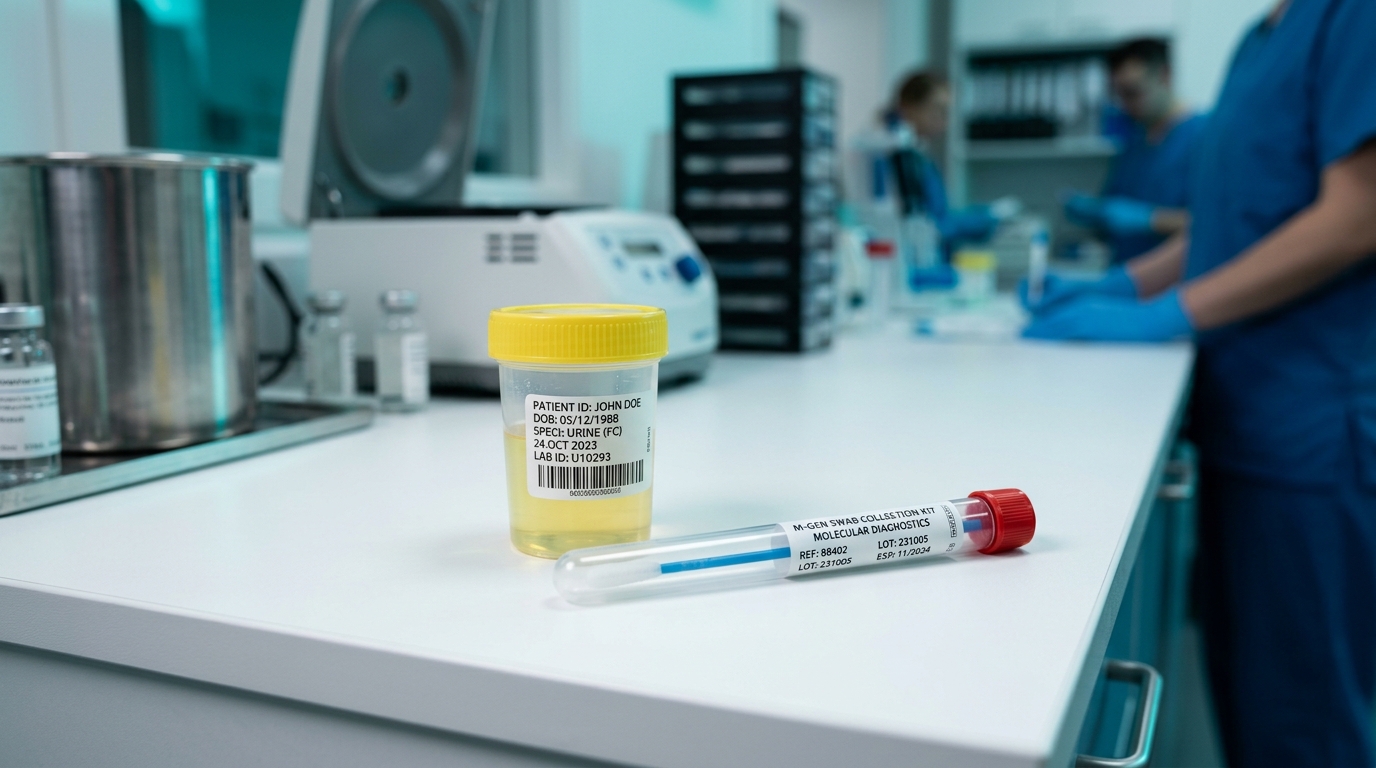
In contemporary clinical practice across Dubai, Abu Dhabi, and the wider UAE, transitioning from older culture or enzyme immunoassays to automated real-time PCR NAAT has revolutionized diagnostic sensitivity and specificity. Scheduling comprehensive discrete sexual health and STI testing packages in Dubai ensures patients receive high-precision molecular amplification without uncomfortable invasive procedures.
Diagnostic Superiority: Why NAAT Has Replaced Culture and Antigen Tests
For decades, cell culture using McCoy cells was the historic diagnostic benchmark for chlamydial infection. However, culture requires maintaining strict organism viability during transport, has an analytical turnaround of 3 to 7 days, and exhibits a clinical sensitivity of merely 60% to 80% due to microbial degradation. Rapid enzyme immunoassays (EIA) and direct fluorescent antibody (DFA) tests suffered from high cross-reactivity with commensal microflora.
- Near 100% Analytical Sensitivity: Molecular NAAT targets conserved chlamydial genomic DNA or cryptic plasmid RNA sequences. By amplifying target nucleic acids by billions of copies, NAAT detects minimal organism loads down to 1–5 elementary bodies per milliliter.
- Non-Invasive Specimen Flexibility: Unlike culture which demands viable columnar epithelial cells scraped from the endocervix or deep male urethra, NAAT operates reliably on non-invasive specimens, including patient-collected vaginal swabs and first-catch urine.
- Multiplex Target Co-Detection: Contemporary molecular platforms simultaneously amplify Chlamydia trachomatis and Neisseria gonorrhoeae (CT/NG multiplex), frequently expanding to include Mycoplasma genitalium and Trichomonas vaginalis from a single specimen aliquot.
Primary Clinical Indications for Chlamydia NAAT Testing
Leading global health authorities—including the U.S. Centers for Disease Control and Prevention (CDC), the World Health Organization (WHO), the British Association for Sexual Health and HIV (BASHH), and the Dubai Health Authority (DHA)—outline explicit criteria governing when chlamydia NAAT testing is medically indicated:
| Clinical Scenario | Target Patient Cohort | Preferred Specimen Type | Clinical Rationale & Guidelines |
|---|---|---|---|
| Asymptomatic Universal Screening | Sexually active women < 25 years; older women with new/multiple partners | Self-collected or clinician-collected vaginal swab | Annual screening significantly reduces the incidence of pelvic inflammatory disease (PID) and secondary subfertility. |
| Symptomatic Urethritis / Dysuria | Men presenting with clear/mucopurulent discharge or burning | First-catch urine (initial 15–30 mL stream) | Chlamydia accounts for 30–50% of non-gonococcal urethritis (NGU); rapid NAAT confirms etiology and guides targeted macrolide/tetracycline therapy. |
| Symptomatic Cervicitis / Vaginitis | Women presenting with abnormal intermenstrual bleeding, postcoital spotting, or dyspareunia | Vaginal swab (preferred) or endocervical swab | Excludes chlamydial infection prior to empirical antimicrobial escalation; detects subclinical upper reproductive tract ascendency. |
| Suspected Pelvic Inflammatory Disease | Women presenting with lower abdominal tenderness, cervical motion tenderness, and adnexal tenderness | Endocervical or vaginal NAAT + empiric broad coverage | Immediate identification of chlamydial involvement aids contact tracing and informs long-term tubal assessment. |
| Antenatal Obstetric Booking | All pregnant women during first prenatal trimester visit | Self-collected vaginal swab or first-void urine | Untreated chlamydia in pregnancy precipitates preterm labor, premature rupture of membranes (PPROM), neonatal conjunctivitis, and chlamydial infant pneumonia. |
| Anatomical Extra-Genital Exposure | Individuals engaging in receptive oral or anal intercourse | Pharyngeal swab and/or rectal flocked swab | Genital testing alone misses over 70% of extragenital infections in high-risk cohorts due to isolated pharyngeal or anorectal colonization. |
| Sexual Contact Notification | Sexual partners of individuals diagnosed with confirmed CT | Anatomically appropriate NAAT + presumptive treatment | Interrupts transmission chains and prevents ping-pong re-infection between ongoing sexual partners. |
Specimen Selection: Anatomical Nuances & Diagnostic Yield
The diagnostic yield of chlamydia NAAT is directly contingent upon selecting the correct anatomical sample and adhering to strict pre-analytical collection guidelines:
1. Women: Vaginal Swabs vs Urine
Extensive comparative trials demonstrate that patient-collected or clinician-collected vaginal swabs are superior to first-catch urine in female patients. Vaginal swabs collect epithelial cells shed across the introitus and vaginal vault, yielding a 2% to 5% higher analytical sensitivity compared to female urine specimens. Female urine testing dilutes organisms and is susceptible to physiological urea inhibitory factors. Endocervical swabs collected during speculum pelvic examination provide equivalent sensitivity but involve unnecessary clinical discomfort when speculum exam is not otherwise required.
2. Men: First-Catch Urine Protocols
In male patients, first-catch urine (the initial 15 to 30 mL voided stream) is the undisputed gold-standard specimen. Crucially, clinicians and patients must understand the physiological collection rule: the patient must not have voided for at least one hour (ideally two hours) prior to collection. Mid-stream clean-catch urine—which is standard for routine bacterial urinary tract infection (UTI) culture—washes away the urethral epithelial cells where chlamydia resides, resulting in catastrophic false-negative outcomes.
3. The Extragenital Imperative: Rectal & Pharyngeal NAAT
A critical blind spot in clinical practice is relying solely on urogenital screening. Chlamydia trachomatis replicates efficiently in columnar and transitional epithelial tissues of the rectum and pharynx. Clinical guidelines mandate extragenital swab NAAT for anyone reporting receptive anal or oral sexual contact. Rectal chlamydial infection is overwhelmingly asymptomatic but carries significant risk of inflammatory proctitis and lymphogranuloma venereum (LGV serovars L1–L3).
Diagnostic Window Periods and False-Negative Risks
A common clinical dilemma centers on testing immediately after an unprotected sexual encounter. The biological incubation period for Chlamydia trachomatis ranges between 7 and 21 days. Performing NAAT within 24 to 72 hours of exposure carries a profound risk of false-negative results, as the bacterial load within host epithelial cells has not reached the analytical limit of detection. Patients presenting immediately after a high-risk exposure should be evaluated for post-exposure antimicrobial prophylaxis or scheduled for repeat molecular NAAT testing at 14 days post-exposure.
Test-of-Cure (TOC) vs Re-Screening: Avoiding the Nucleic Acid Trap
One of the most frequent errors in outpatient venereology is ordering a chlamydia NAAT too early following antibiotic treatment. Understanding the biochemical clearance of bacterial nucleic acids is paramount:
- Dead DNA Persistence: Following effective therapy with first-line Doxycycline (100 mg orally twice daily for 7 days) or Azithromycin, bacterial killing is rapid. However, residual, non-viable fragments of chlamydial DNA and cryptic plasmid persist within the mucosal epithelium for up to 3 to 4 weeks.
- False-Positive TOC Trap: If NAAT is performed within 21 days of treatment completion, it will amplify dead bacterial DNA fragments, leading to an erroneous diagnosis of treatment failure and unnecessary repeat antibiotic administration.
- When is Test-of-Cure Indicated? Routine TOC is not recommended for non-pregnant patients treated with standard doxycycline who experience complete symptom resolution. TOC is strictly indicated in:
- Pregnant women (performed 4 weeks post-treatment completion via NAAT).
- Patients treated with alternative, non-standard antimicrobial regimens.
- Patients with documented compliance failures or persistent symptoms.
- Mandatory 3-Month Re-Testing: The CDC and DHA strongly recommend re-testing all infected individuals approximately 3 months post-treatment. This is not a test-of-cure for treatment failure, but a screening for high-frequency re-infection from untreated regular partners.
Frequently Asked Questions (FAQ)
Can a routine urine culture detect Chlamydia trachomatis?
No. Standard mid-stream urine culture utilizes nutrient agar designed to isolate extracellular uropathogens such as Escherichia coli, Klebsiella, or Enterococcus. Chlamydia trachomatis is an obligate intracellular bacterium that cannot replicate outside of host living cells and will never grow on standard culture plates. Only molecular NAAT can detect chlamydia in urine.
Why is Doxycycline preferred over Azithromycin for chlamydia treatment?
Updated clinical treatment guidelines from the CDC and international societies designated oral Doxycycline (100 mg twice daily for 7 days) as the preferred first-line regimen for uncomplicated urogenital, rectal, and pharyngeal chlamydia. Randomized controlled trials demonstrated that single-dose Azithromycin (1 g) has an inferior microbiological cure rate for rectal chlamydia (74% vs 97% for doxycycline), which frequently co-exists undetected with urogenital infection.
How does QuRapid support private STI screening in the UAE?
QuRapid offers confidential, fully accredited laboratory molecular NAAT testing panels across Dubai and the UAE. Patients access seamless specimen collection, fast turnaround, multiplex pathogen identification, and discreet clinical reporting adhering strictly to UAE health data confidentiality standards.
Authoritative Clinical References
- Centers for Disease Control and Prevention (CDC) – Chlamydial Infections in Adolescents and Adults: 2021 STI Treatment Guidelines
- World Health Organization (WHO) – Guidelines for the Treatment of Chlamydia trachomatis Infections
- British Association for Sexual Health and HIV (BASHH) – United Kingdom National Guideline for the Management of Chlamydia trachomatis