
When is HIV RNA Testing Indicated? Early Detection, Viral Load NAAT & Acute Window Period
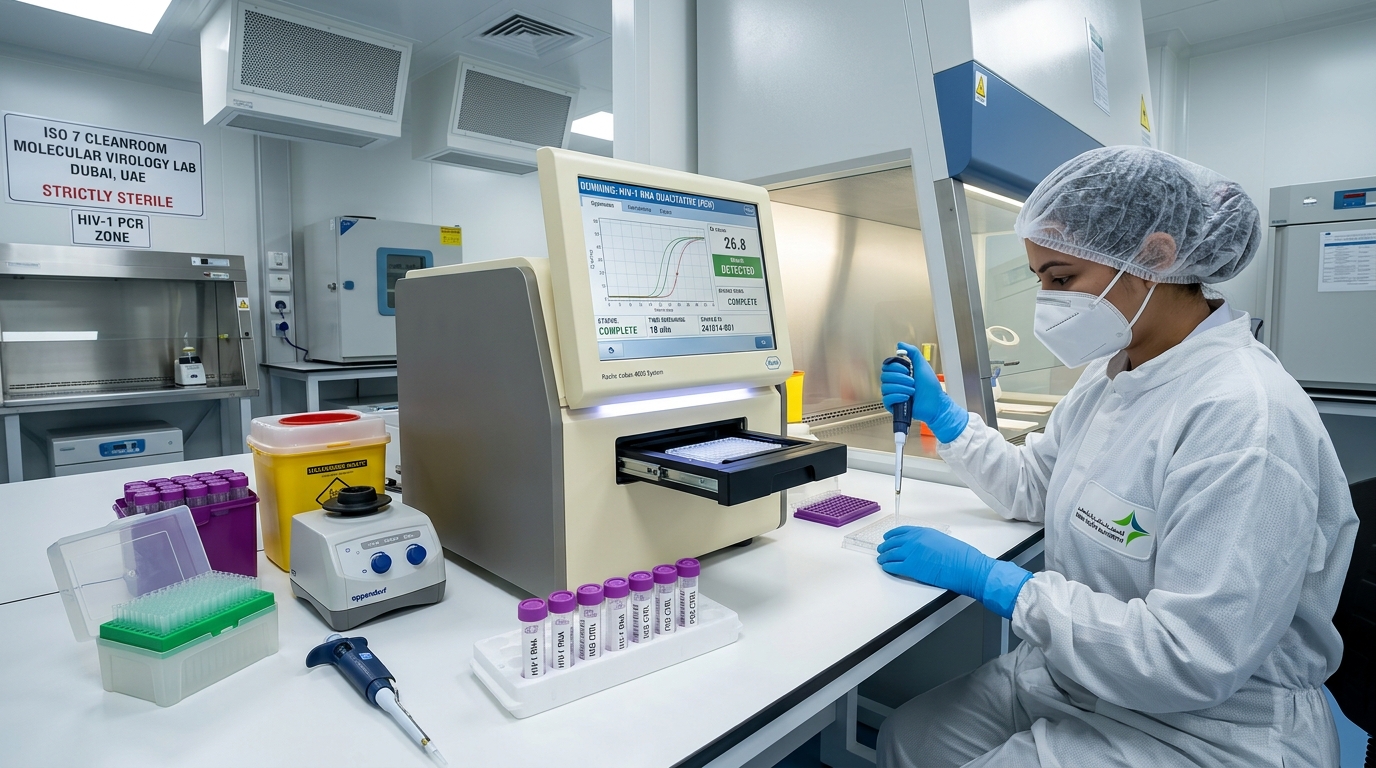
Sexually active adults in Dubai, Abu Dhabi, and across the UAE who encounter high-risk sexual exposures frequently endure acute diagnostic anxiety. Waiting 4 to 6 weeks for conventional antibody or antigen tests can feel agonizing. For individuals seeking rapid, confidential closure or patients presenting with severe acute flu-like symptoms following high-risk exposure, scheduling comprehensive confidential STD test packages in Dubai incorporating molecular RNA detection delivers unambiguous diagnostic clarity at the earliest physiological milestone.
Qualitative vs. Quantitative HIV RNA Testing
In clinical virology, two primary formats of HIV RNA testing exist, each fulfilling distinct clinical mandates:
- Qualitative HIV-1 RNA PCR (Diagnostic Screening): Designed with an ultra-low limit of detection (typically 20 to 30 copies/mL) to answer a binary diagnostic question: Is replication-competent HIV-1 genetic material present in the blood? It is FDA-cleared and internationally recognized specifically for early diagnostic screening and blood donor testing.
- Quantitative HIV-1 RNA (Viral Load Monitoring): Reports the exact numerical concentration of viral RNA copies per milliliter of plasma (e.g., 250,000 copies/mL or <20 copies/mL). While used diagnostically in acute retroviral syndromes, its primary therapeutic role is monitoring response to Antiretroviral Therapy (ART), establishing treatment success when the viral load reaches "Undetectable" (<20 to 50 copies/mL), and validating the U=U (Undetectable = Untransmittable) benchmark.
Kinetics of Early Infection: The RNA Surge
Following transmission across mucosal barriers, the virus undergoes exponential expansion before host defenses can mount an antibody response:
| Diagnostic Biomarker | Biological Appearance Milestone | Peak Concentration Window | Comparative Diagnostic Advantage |
|---|---|---|---|
| HIV-1 RNA (Plasma) | Days 7 to 14 post-exposure | Days 21 to 28 (Often >1,000,000 copies/mL) | Earliest detectable marker; identifies infection 1 to 2 weeks before p24 antigen |
| p24 Core Capsid Antigen | Days 14 to 21 post-exposure | Days 21 to 28 (Transient peak) | Forms the antigen component of 4th-Gen Combo tests; wanes as antibodies bind it |
| Anti-HIV IgM Antibodies | Days 21 to 28 post-exposure | Weeks 4 to 6 | First host immune response; marks early seroconversion |
| Anti-HIV IgG Antibodies | Days 28 to 42 post-exposure | Month 2 onwards (Lifelong persistence) | Permanent mature immune marker; basis of 3rd-Gen and rapid point-of-care strips |
Evidence-Based Clinical Indications: When to Order HIV RNA
Because molecular PCR requires specialized automated thermal cyclers and carries higher testing costs than standard serology, clinical guidelines establish five primary indications:
1. Suspected Acute Retroviral Syndrome (ARS)
Approximately 50% to 80% of individuals experience severe acute illness 2 to 4 weeks after contracting HIV. Symptoms include high fevers, diffuse erythematous maculopapular rash, exudative pharyngitis, cervical lymphadenopathy, profound myalgia, and oral mucosal ulcerations. During ARS, viral replication is rampant (often >100,000 to millions of copies/mL), while 4th-generation antibody components may remain completely non-reactive. RNA PCR is mandatory to establish the diagnosis and initiate immediate life-saving ART.
2. Resolution of Discordant or Indeterminate 4th-Gen Screening
Under the CDC diagnostic algorithm, if an initial 4th-generation test is reactive, but the subsequent HIV-1/HIV-2 antibody differentiation immunoassay is negative or indeterminate, reflex HIV-1 RNA PCR testing is required. If RNA is detected, it confirms acute infection prior to antibody maturation. If RNA is undetectable, the original reactive screen was a biological false positive.
3. Diagnosis in Infants Born to HIV-Positive Mothers
Maternal anti-HIV IgG antibodies passively cross the human placenta during pregnancy and persist in the infant’s bloodstream for up to 18 to 24 months. Consequently, standard antibody and 4th-generation tests will return falsely positive in all exposed infants regardless of true infection status. Qualitative HIV DNA/RNA PCR performed at birth, 2 to 4 weeks, and 4 to 6 months of age is the only validated method to definitively diagnose or rule out pediatric vertical transmission.
4. Ultra-Early Screening Following High-Risk Exposure (Days 10–14)
Patients who experienced condomless intercourse or needlestick exposure and cannot tolerate the psychological distress of waiting 28 to 45 days for antibody testing can obtain definitive testing via qualitative RNA PCR starting at 10 to 14 days post-exposure.
5. Monitoring Antiretroviral Therapy (ART) Efficacy
In diagnosed individuals receiving antiretroviral medications, quantitative viral load testing is performed at baseline, 4 to 8 weeks after starting therapy, and every 3 to 6 months once viral suppression (<50 copies/mL) is achieved to detect viral rebound or emerging drug resistance early.
Diagnostic Pitfalls: Can an HIV RNA Test Be Falsely Negative?
While RNA PCR offers unparalleled analytical sensitivity, clinicians must interpret results within specific pharmacological and biological contexts:
- The Impact of PEP and PrEP: Patients taking Post-Exposure Prophylaxis (PEP) or Pre-Exposure Prophylaxis (PrEP) have active antiretroviral drug levels in plasma that suppress viral replication below the PCR instrument’s detection limit. Testing during or immediately after PEP can produce a false-negative RNA result; conclusive testing must occur 4 to 6 weeks and 3 months after completing the 28-day course.
- “Elite Controllers” (<0.5% of population): Rare individuals naturally suppress HIV viral replication to undetectable levels without medications due to unique HLA-B57/B27 genetic profiles. In these individuals, RNA PCR may be undetectable while 4th-generation antibody tests remain strongly positive.
- HIV-2 Infection: Standard HIV RNA PCR assays specifically amplify HIV-1. In rare patients infected with HIV-2 (primarily endemic in West Africa), specialized HIV-2 specific molecular assays must be ordered. Point-of-care triaging with certified rapid diagnostic testing tools supports comprehensive clinic workflows.
Frequently Asked Questions (FAQs)
How early can an HIV RNA test detect the virus?
An HIV RNA PCR test can detect the genetic material of the virus as early as 7 to 10 days following exposure, with peak sensitivity achieved at 14 days. It is the earliest available diagnostic test for HIV infection.
What does an “undetectable” HIV RNA viral load mean?
In an individual taking antiretroviral therapy (ART), an undetectable viral load means the amount of virus in the blood is below the laboratory instrument’s detection limit (usually <20 or <50 copies/mL). Under the scientifically proven "U=U" principle, a person with an undetectable viral load cannot transmit HIV sexually to partners.
Can I take an HIV RNA test while on PEP?
While an RNA test can be run as a baseline before starting PEP, testing while actively taking PEP medications is generally not recommended because the antiretrovirals suppress viral replication, potentially leading to a false-negative result. Definitive testing is performed after completing the medication course.
Scientific References & Clinical Guidelines
- Centers for Disease Control and Prevention (CDC). Laboratory Testing for the Diagnosis of HIV Infection: Updated Recommendations. MMWR Recomm Rep. 2018;67(1):1-12.
- World Health Organization (WHO). Consolidated Guidelines on HIV Testing Services and Viral Load Monitoring. WHO Guidelines. 2020; ISBN 978-92-4-155058-1.
- Journal of Clinical Virology. Performance and Clinical Utility of Qualitative and Quantitative HIV-1 RNA Assays in Early Acute Infection. J Clin Virol. 2020;128:104432.